

Geography,Sustainability, Socio-Economic and Environmental Futures Education (GEOSAFE)Research Consortium
Main research focus and other areas of research interest of the RG:
The GEOSAFE Research Consortium operates at the intersection of the following six research domains:
1. Climate-responsive pedagogy and disaster education;
2. Technology-enhanced learning, including GIS, environmental remote sensing, AR/VR, and mobile technologies;
3. Future skills development and green entrepreneurship education;
4. Teacher professional development in sustainability education;
5. Decolonial approaches to science and social science education; and
6. Indigenous Knowledge integration in contemporary curricula.
Title of most recent research project: Not Yet
A maximum of seven (7) other current or completed research projects:
Name of the Coordinator:
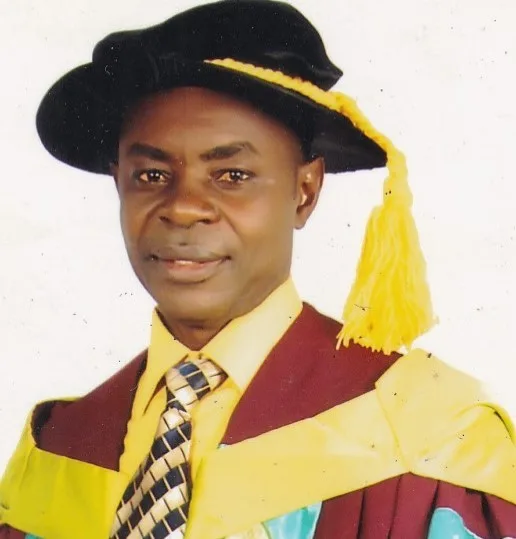
Professor Joseph Chinweobo Onuoha
UNN email address of the RG: geosafe@unn.edu.ng
UNN email address of the coordinator:
Email: joseph.onuoha@unn.edu.ng
Current webpage of the RG:
Phone number of the RG: Phone: +2348037550795
Phone number of the coordinator:
Phone: +2348037550795
Base Faculty/Institute/Center of the RG:
Department of Social Science Education, Faculty of Education
Department of the Coordinator: Department of Social Science Education
List and brief profiles of members (one paragraph per member) with their UNN website url to their detailed CVs (hyperlinks are OK)
1. Professor Joseph C. Onuoha (Coordinator, Department of Social Science Education, Faculty of Education, UNN)
Professor Onuoha is a multidisciplinary scholar whose research spans social studies education, economics, and entrepreneurship
education, with a specialisation in teacher education, curriculum development, and innovative instructional strategies that enhance student achievement and retention. He is actively engaged in entrepreneurship education and community development, equipping students and community members with entrepreneurial skills for wealth creation, employability, and socio-economic empowerment. A skilled researcher and data analyst, he provides postgraduate training in advanced statistical analysis, including structural equation modelling, and promotes evidence-based practice in education. His competencies extend to ICT integration in teaching and learning, blended and digital instructional tools, educational psychology, and the design and evaluation of social science
curricula aimed at fostering sustainability, civic responsibility, and national development. https://staffprofile.unn.edu.ng/profile/276
2. Dr. Emmanuel Eze (Department of Social Science Education, Faculty of Education, UNN)
Dr. Emmanuel Eze is a climate and sustainability education researcher specialising in disaster risk reduction, geography
education, and technology-enhanced pedagogy in African contexts. He holds a PhD (summa cum laude) focused on disaster risk reduction capacity gaps in UNESCO-designated heritage sites in Africa. His research integrates climate
science, environmental education, teacher professional development, and digital tools including GIS, smartphone-based learning, and AR/VR applications. He has led and coordinated Erasmus+ Virtual Exchange initiatives and contributed to
international research collaborations linking Sub-Saharan Africa and Europe. His work develops culturally-responsive climate literacy frameworks, integrates Indigenous Knowledge Systems into curricula, and advances evidence-based models for climate and disaster education. Dr. Eze brings proven experience in grant acquisition, consortium coordination, capacity building, and curriculum innovation, with his work closely aligned with SDGs 4, 11, 13, and 17, the Sendai Framework for Disaster Risk Reduction, and EU–Africa sustainability education priorities. https://staffprofile.unn.edu.ng/profile/2969
3.
Dr. Chukwuma Christian Mgboji (Department of Computer and Robotics Education, Faculty of Vocational and Technical Education, UNN)
Dr. Mgboji holds a Bachelor of Science in Computer and Robotics Education from the University of Nigeria, Nsukka, a Master of Information Technology (MIT) from the University of Lagos, Akoka, and both a Master’s degree and a PhD from the Department of Computer and Robotics Education at UNN. He is a Lecturer at the University of Nigeria, Nsukka, where he is actively engaged in teaching, research, and project management. His disciplinary expertise spans human-computer interaction, information science, database systems, and vocational education. Dr. Mgboji brings substantial industry experience from his professional engagements with Suburban Telecoms, Brian Integrated Systems, Qmatics (Impression Alliance), and UNITeS Cisco Networking Academy, among
others. A passionate trainer and technology development advocate, he contributes to GEOSAFE’s technology-enhanced pedagogy and EdTech innovation agenda with a strong foundation in both academic research and real-world IT practice. https://staffprofile.unn.edu.ng/profile/3122
4. Dr. Ojima Isaac Apeh (Department of Geoinformatics and Surveying, Faculty of Environmental Studies, UNN)
Dr. Apeh is a Senior Lecturer (equivalent to Assistant Professor) in the Department of Geoinformatics and Surveying at the University of Nigeria, Nsukka. He holds a PhD in Geophysical Geodesy from The Hong Kong Polytechnic University, an MSc in Geodesy and Geodynamics (with Distinction), and a BSc in Geoinformatics and Surveying (First Class Honours) from UNN. His
research focuses on environmental remote sensing and earth observation, specifically monitoring environmental changes using advanced geospatial technologies, as well as gravity field modelling and geodynamics. He specialises in applying advanced geospatial and geophysical techniques to real-world environmental and societal challenges, with a particular commitment to fostering geospatial science and sustainable development in Africa. Dr. Apeh has published over 24 peer-reviewed journal papers and presented at major international venues including the European Geoscience Union (EGU), American Geophysical Union
(AGU), and the International Union of Geodesy and Geophysics (IUGG), with active collaborations spanning Africa, Asia, and Europe.
5. Dr. Uloma Onwuzurike (Department of Social Science Education, Faculty of Education, UNN)
Dr. Onwuzurike is an academic and educator dedicated to the intersection of geographical thought, environmental stewardship, and pedagogical practice. With over seventeen years of teaching experience spanning Nigerian secondary schools and university education, she brings both theoretical depth and classroom-tested insight to the consortium. Her research focuses on climate science and human response, green entrepreneurship education, and inclusive approaches to environmental education. She has
published extensively on the impacts of climate change, the pursuit of environmental sustainability, and the theoretical and practical dimensions of education. A strong advocate for community engagement, she holds that academic knowledge must translate into tangible social action, a philosophy that aligns directly with GEOSAFE’s applied research mandate. https://staffprofile.unn.edu.ng/profile/6045
6. Barrister Adaobiagu N. Obiagu (Department of Social Science Education, Faculty of Education, UNN
Barrister Obiagu is trained in both Education and Law, and brings over a decade of experience in university teaching and educational research, complemented by prior teaching in Nigerian secondary schools. Her research examines the intersections of education, democracy, citizenship, gender, and peacebuilding, with particular attention to curricular and pedagogical
approaches that foster wellbeing, social cohesion, conflict transformation, nonviolent civic participation, and gender equality. Her dual disciplinary grounding equips GEOSAFE with a critical legal and human rights lens, particularly in advancing decolonial pedagogies, inclusive curriculum design,and the integration of African and Indigenous Knowledge Systems into mainstream
educational frameworks. https://staffprofile.unn.edu.ng/profile/5050
7. Dr. Juliana Ngozi Obiorah (Department of Social Science Education, Faculty of Education, UNN)
Dr. Obiorah is a Lecturer in the Department of Social Science Education at UNN, where she completed her Bachelor’s, Master’s, and Doctoral degrees in Economics Education. Her research interests span economics, socio-economic development, entrepreneurship education, mental health in educational settings, emotional intelligence, and digital technologies. She is skilled in data analytics, with expertise in the management, processing, and advanced statistical analysis of scientific data to support evidence-based research. Dr.Obiorah is particularly interested in how educational experiences can improve students’ mental health, motivation, and academic achievement, and through her scholarly publications and classroom practice, she seeks to make learning more engaging, practical, and socially relevant.
8. Dr. Zipporah Omenma (Department of Social Science Education, Faculty of Education, UNN)
Dr. Omenma holds a doctorate in Population and Family Life Education and serves as a Lecturer in the Department of Social Science Education at UNN. Her research interests span population dynamics, reproductive health education, contraception and family planning, peace education, and the intersection of population growth and environmental sustainability. She has published substantively in these areas and brings a vital demographic and social development perspective to the GEOSAFE consortium, particularly in grounding sustainability education within the lived realities of African communities and households. https://staffprofile.unn.edu.ng/profile/6029
9. Dr. Ihechi Goodnews Ezeocha (Department of Social Science Education, Faculty of Education, UNN)
Dr. Ezeocha is a Lecturer and educational researcher at UNN whose work focuses on the application of innovative instructional strategies to enhance learning outcomes in economics and the social sciences across diverse educational levels. He has particular expertise in blended learning, teacher education, higher education reform, and the use of qualitative and quantitative research software including NVivo, ATLAS.ti, SPSS, and EViews. His research and teaching are oriented toward bridging educational achievement gaps arising from socio-economic divides, and toward developing 21st-century students equipped to contribute
meaningfully to community and national development.
Members’ Google Scholar Citation links
1. Prof. J. C. Onuoha: https://scholar.google.com/citations?user=yH5NoAcAAAAJ&hl=en
2. Dr. Emmanuel Eze https://scholar.google.com/citations?user=95x8v1QAAAAJ&hl=en
3. Dr. Chukwuma Christian Mgboji https://scholar.google.com/citations?user=LUHmcEwAAAAJ&hl=en
4. Dr. Ojima Isaac Apeh
5. Dr. Uloma Onwuzurike https://scholar.google.com/citations?user=Q4fSf1kAAAAJ&hl=en
6. Barrister Adaobiagu N. Obiagu
7. Dr. Juliana Ngozi Obiorah
8. Dr. Zipporah Omenma https://scholar.google.com/citations?
user=HnBatDsAAAAJ&hl=enG
9. Dr. Ihechi Goodnews Ezeocha
Members’ ResearchGate links:
1. Prof. J. C. Onuoha: https://www.researchgate.net/profile/Joseph-C-Onuoha
2. Dr. Emmanuel Eze https://www.researchgate.net/profile/Emmanuel-Eze-8
3. Dr. Chukwuma Christian Mgboji https://www.researchgate.net/profile/Chukwuma-Mgboji/research
4. Dr. Ojima Isaac Apeh
5. Dr. Uloma Onwuzurike https://www.researchgate.net/profile/Uloma-Onwuzurike
6. Barrister Adaobiagu N. Obiagu: https://www.researchgate.net/profile/Adaobiagu_Obiagu
7. Dr. Juliana Ngozi Obiorah
8. Dr. Zipporah Omenma https://www.researchgate.net/profile/Zipporah-Omenma
9. Dr. Ihechi Goodnews Ezeocha
10 key publications of the RG from 2019 till date
1. Onuoha, J. C.; Eze, E.; Ezeaputa, C. M;
Okpabi, J. U. & Onyia, J. C. (2021): Does Learning Geography Increase Climate Change Awareness? A Comparison of
School Subjects’ Influence on Climate Change Awareness, Journal of Geography, 120 (4), 140-151. DOI: 10.1080/00221341.2021.1949027 To link to this article: https://doi.org/10.1080/00221341.2021.194902. Thomson
Reuters JCR IF: 2.40
2. Onuoha, J. C.; Onyepunuka, M. I; Idika, E. O.; Ekwesaranna, F. & Eze, E. C. (2021). Effects of access database management system hands-on experience on students’ academic achievement and self-efficacy in database management. International
Journal of Psychosocial Rehabilitation, 25 (3), 316-334. SNIP IF = 0.015; SCImago IF = 0.2
3. Eze, E. (2025). Transforming professional development through the EMMA mentorship framework to strengthen climate change education in under-resourced contexts. Review of Education, 37 (4), 199 – 208. https://reviewofeducation.unn.edu.ng/wp-content/uploads/sites/342/2025/07/REVIEW-VOL30-4-2025-018.pdf
4. Eze, E. & Bienert, N. (2025). Transforming Imaginations of Africa in Geography Classrooms Through Teacher Reflexivity. Education Sciences, 15 (8), 1041, https://doi.org/10.3390/educsci15081041
5. Obiagu, A. Onyekachi, C., Amadi, R., Eze, E. (2025). Multicultural Education Contents, Attitudes, Practices, and Challenges in Nigeria’s Social Studies Education. International Journal of Literacy, Culture, and Language Education, 5, 62–82.
http://dx.doi.org/10.14434/ijlcle.v5i.36895
6. Obiagu, A. (2025). Teaching self-reliance and empowerment in civics classroom: Towards sociopolitical capabilities approach. Citizenship,Social and Economics Education, 24(2-3), 256-281 https://doi.org/10.1177/14788047251327548
7. Dibia, S.I., Wala, K. T., Onwuzurike, U., Anabaraonye, B.& Arinze, C.P.(2023).The impacts of
plastic pollution on public health in Nigeria. International Journal of
Research in Civil Engineering and Technology. Vol. 4(1): 06-10 http://www.civilengineeringjourlnals.com/ijrcet
8. Mgboji, C.C., Ibezim, N., Uzoegwu, C.R., & Fadip, N., (2025) Development of a learning management system in Microsoft Excel for students in Universities. Gradiva 64, 9, pp. 83–96. Zenodo. DOI: https://doi.org/10.5281/zenodo.17213542.
9. Mgboji, C.C., Ibezim, N.E., Nannim, F.A. et al. (2026) Development of an Arduino-based Multimodal Fusion Biometric Examination Impersonation System (ABMFBEIS) for detecting examination impersonation. Discov Educ (2026). https://doi.org/10.1007/s44217-026-01151-3
10. J. Tochukwu Omenma, Anthony C. Ike, Paulinus O. Agbo, Zipporah Onyinyechi Omenma & Edlyne E. Anugwom (2026). Understanding social media-mediated myths about Covid-19 in Nigeria. Innovation:The European Journal of Social Science Research,
2026https://doi.org/10.1080/13511610.2026.2628062.
List of patents/exhibitions/shows/productions, etc
from 2019 till date

 W A T
W A T