
CONFERENCE TAKEAWAY
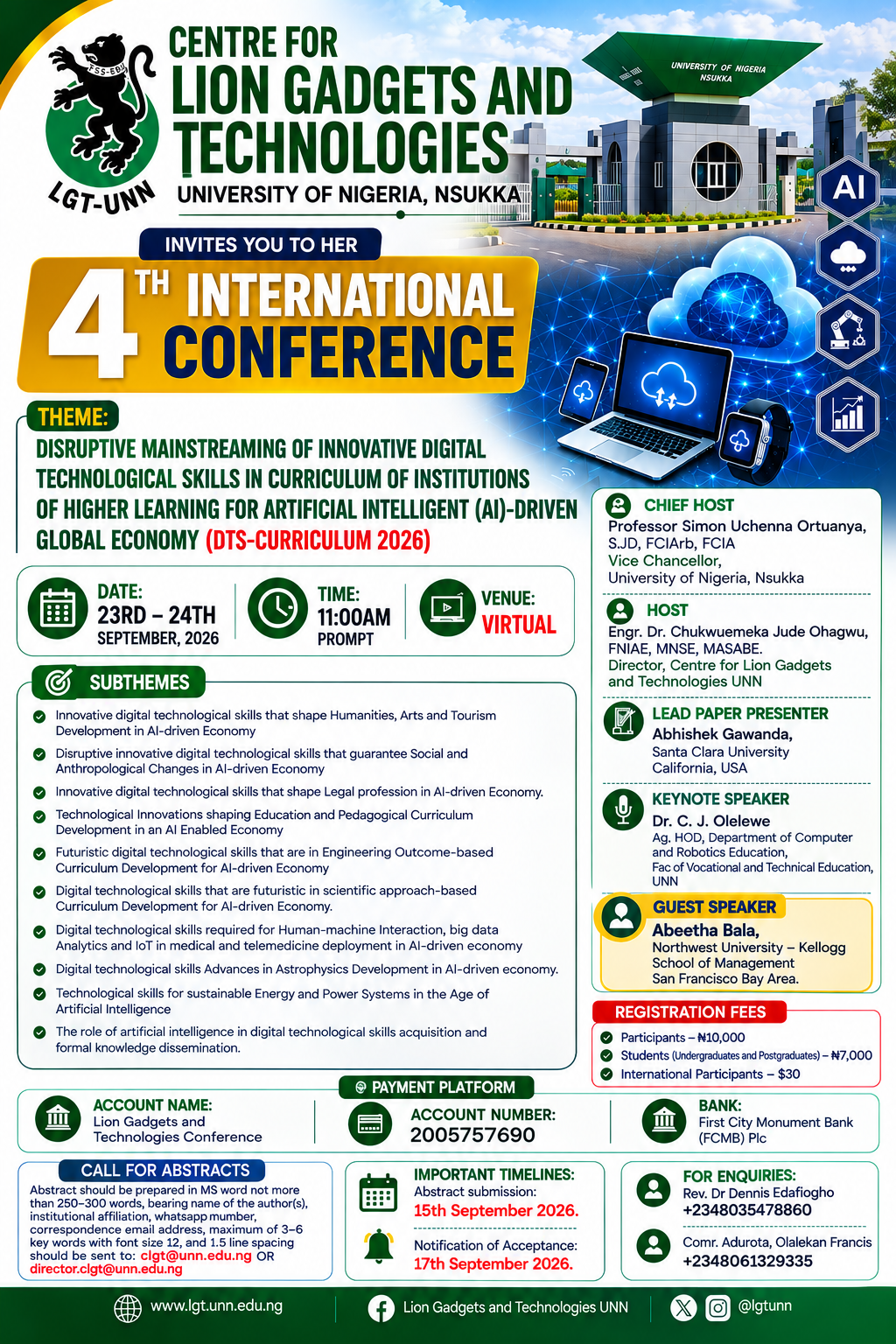
Pragmatically, artificial Intelligence (AI) continues to redefine the architecture of the global economy, institutions of higher learning stand at a decisive crossroad. The rapid evolution of AI technologies ranging from deep machine learning and natural language processing to robotics and intelligent automations demand a fundamental rethinking of how knowledge is delivered, skills are developed, and graduates are prepared for the future. The mainstreaming of innovative digital technological skills into the curriculum is no longer a forward-looking aspiration; it is an urgent necessity for institutions seeking to remain relevant and impactful in an AI-driven world. This theme underscores the need to disrupt traditional pedagogical frameworks by embedding AI literacy, computational thinking, data science, cloud computing, cybersecurity, and emerging technology proficiencies into the very fabric of institutions of higher learning. Such integration must go beyond isolated courses or elective modules; it should be woven into interdisciplinary learning pathways that connect theory with real-world application. By doing so, institutions can cultivate graduates who are not only technically proficient but also capable of ethical reasoning, creative problem-solving, and adaptive leadership in complex, technology-rich environments. The transformation requires a multi-stakeholder approach. Educators must embrace innovative teaching methodologies, such as project-based learning, virtual simulations, and AI-powered adaptive learning systems, to personalize and enhance the students’ experiences. Policymakers must create enabling frameworks that support curriculum reform, investment in digital infrastructure, and partnerships between academia and industry. Industry leaders must collaborate with universities to ensure that skill development aligns with evolving market demands, while researchers must explore new frontiers in AI application, ethics, and societal impact. By fostering this synergy, institutions of higher learning can become a catalyst for inclusive growth, ensuring that graduates are equipped not only to participate in but to shape the AI-powered global economy. This conference invites thought leaders, innovators and change agents to engage in deep dialogue, share transformative practices, and co-create actionable strategies that will bridge the skills gap, drive sustainable development, and position nations particularly in (Nigeria) Africa to lead in the emerging digital era.